Roweb within Sirma Group
Roweb is part of Sirma Group, a European technology company with over 30 years of experience in enterprise software and applied AI. Across the group, AI capabilities have been developed for real operational environments, designed to integrate with existing systems, data structures, and regulatory requirements. Within this context, Roweb delivers custom software and integrations for clients in multiple industries, drawing on the broader AI platforms and expertise available at group level.

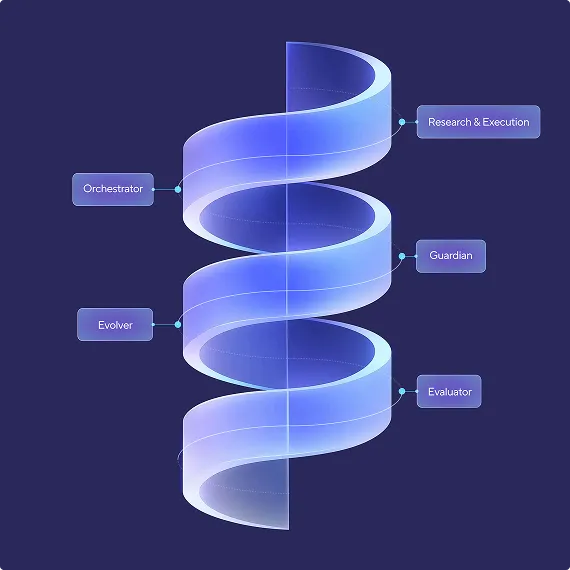
AI at group level. A long-term, enterprise-first approach
Artificial intelligence within Sirma Group is not positioned as a standalone product or a single platform. It is built as an enterprise capability, meant to integrate into complex organizational environments where data sensitivity, compliance, and operational stability matter more than novelty.
At group level, Sirma develops AI platforms and components that are designed to:
- operate on proprietary, client-owned data,
- integrate directly into existing systems and workflows,
- support regulated industries,
- remain adaptable as AI models and technologies evolve.
This approach reflects a practical understanding of how AI is actually adopted inside organizations: incrementally, under strict controls, and always in relation to existing systems rather than in isolation.
Enterprise AI Strategy, Engineering & Infrastructure
We help organizations move from AI experimentation to structured, production-ready implementation. Our approach combines strategy, engineering expertise, and enterprise-grade AI infrastructure powered by Sirma.AI Enterprise.
We support enterprises in defining and accelerating their AI journey with clarity and governance.
- AI opportunity assessment and use-case prioritization
- Platform selection and hybrid model strategy
- Responsible AI advisory and governance frameworks
- ROI analysis and phased implementation roadmaps
- Enterprise AI architecture planning
We build scalable, production-ready AI solutions integrated into enterprise systems.
- Custom AI agents and multi-agent ecosystems
- Conversational interfaces and enterprise copilots
- Retrieval-Augmented Generation (RAG) solutions
- Intelligent document processing and OCR integration
- AI-powered decision engines
- API-first AI integrations inside existing platforms
From prototype to enterprise deployment, we focus on performance, security, and maintainability.
Modern AI requires a solid data foundation.
We design and deploy AI-ready infrastructure.
- Vector databases and semantic search architectures
- Knowledge graph construction and entity extraction
- Hybrid retrieval strategies (vector + graph)
- Secure cloud, on-premise, and air-gapped deployments
- MLOps and model lifecycle management
- Enterprise integration with CRM, ERP, document repositories, and collaboration tools
Our infrastructure ensures performance, scalability, and full data control.
We implement advanced GenAI systems that automate and optimize enterprise workflows.
- Smart document workflows and content generation
- Multi-agent orchestration for complex business processes
- Self-executing workflows with AI decision logic
- Voice-enabled AI systems
- Hybrid AI-human collaboration models
- Self-improving systems that evolve with usage
We transform AI from a standalone feature into an operational capability embedded in daily business processes.
Powered by Sirma.AI Enterprise
Multi-Model Intelligence
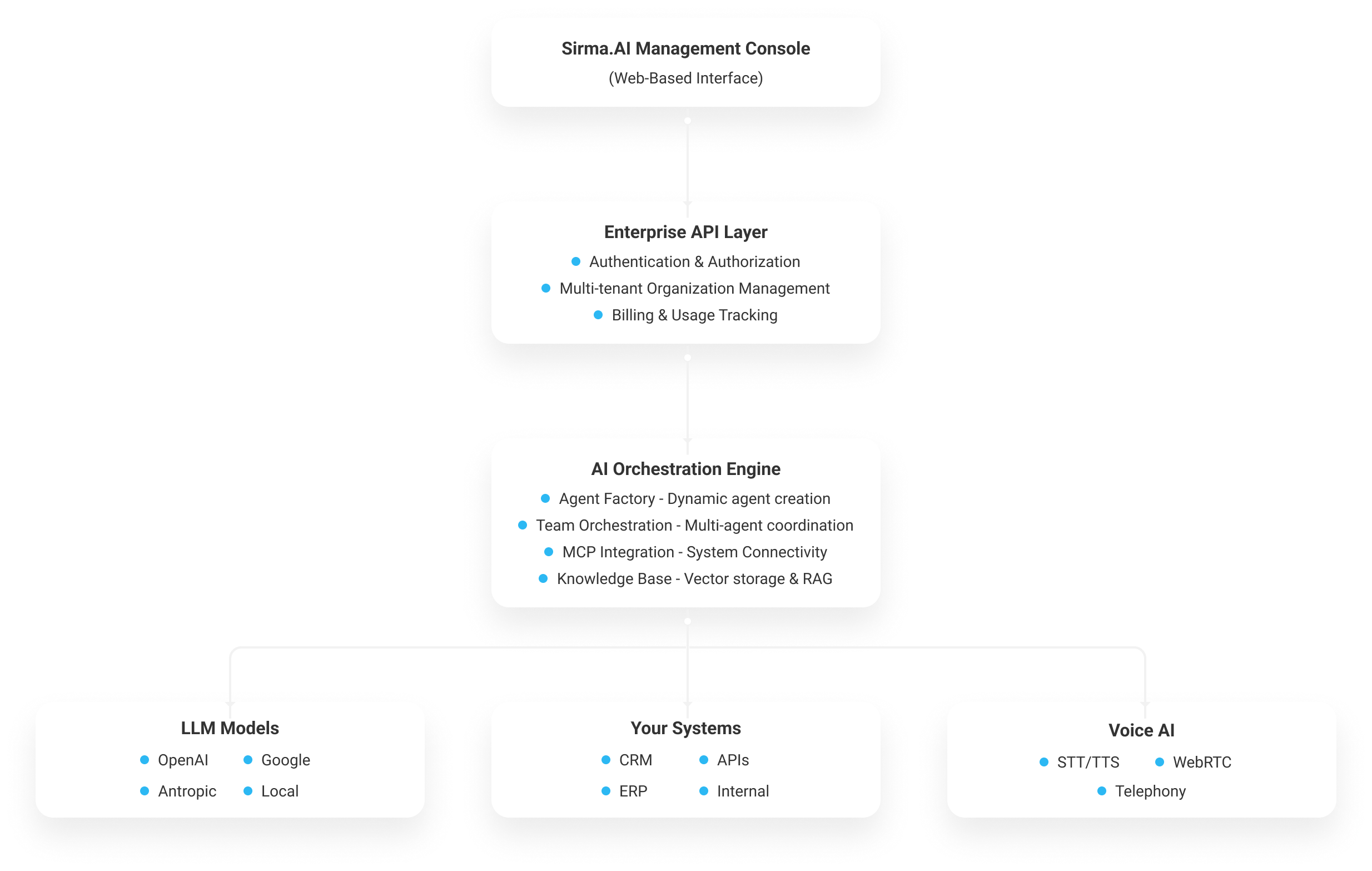
Sirma.AI Enterprise is built as an orchestration layer that can operate across multiple AI models. It does not lock systems into a single provider. Instead, models can be selected and routed based on the specific task, cost profile, performance needs, or regulatory context.
This approach preserves architectural flexibility over time. As technologies change, organizations can introduce or replace models without rebuilding their systems or reworking integrations. In practice, choosing a model becomes a configuration choice rather than a structural constraint.

Platform capabilities

- 500+ models
- Zero vendor lock-in
- Local & Cloud Models
- Hybrid Model Strategy
- Intelligent Model Routing

- SaaS
- On-premise
- Hybrid
- Air-Gapped (offline on local infrastructure)

- Pre-build connections to your existing stack
- CRM/ERP/Databases (SAP, Salesforce & others)
- Document Repos (Sharepoint, Google Drive, etc)
- Communication (Teams, Slack & others)
Deployment Flexibility
Enterprise AI must adapt to infrastructure realities. This flexibility enables AI adoption in sectors where cloud-only approaches are not viable.
Deployment models can align with:
- data residency requirements
- regulatory constraints
- internal security policies
- performance and latency needs
AI capabilities can therefore operate within existing IT governance frameworks rather than forcing infrastructure redesign.
Enterprise Integration
The platform is designed to function inside existing enterprise ecosystems.
AI components do not operate in isolation. They connect to internal APIs, data stores, and operational systems to retrieve information, trigger workflows, validate inputs, and update records.
This integration layer transforms AI from a conversational interface into an operational system component capable of participating in real business processes.
The value emerges from orchestration across systems, not from model output alone.
Architecture & Extensibility
Cloud-native architecture delivering enterprise-grade performance, security, and unlimited scalability.

- No/low-code interface
- Multi-agent systems
- Super agents – operate independently, orchestrate other agents, and manage escalations
- Voice-enabled AI

- Vector-stores for semantic search across enterprise knowledge
- Intelligent OCR and document analysis
- Company knowledge graphs
- Multi-source integration

- Process automation with self-executing workflows
- AI-powered decision-making aligned with your business
- Hybrid AI-human collaboration
- Self-improving systems that get smarter

- Custom tool development
- MCP Server Deployment
- API-First Architecture
- Machine Learning Integration

Data Management Excellence
- Document Structuring - Prepares data for vector embeddings and graph representations
- Knowledge Graph Construction - Extracts entities and relationships across enterprise data
- Hybrid Retrieval - Combines vector search with graph traversal for context-aware answers
- Quality Assurance - Maintains accuracy, freshness, and compliance
Multi-agent AI systems for complex workflows
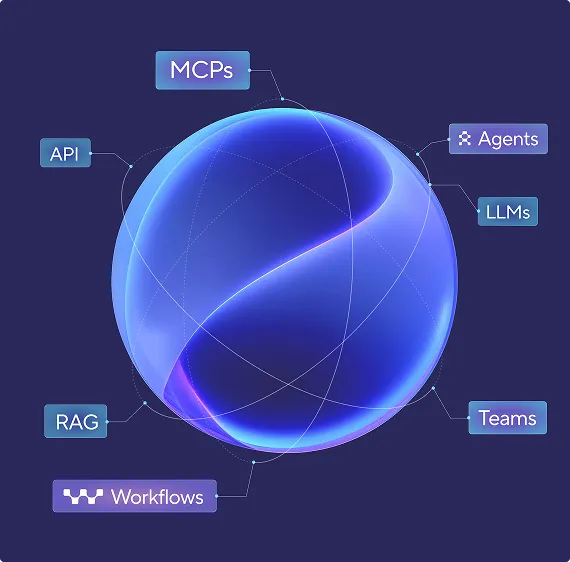
A central concept within Sirma’s AI architecture is the use of multi-agent AI systems.Instead of relying on a single, monolithic model, tasks are distributed across multiple specialized agents.
Each agent is responsible for a defined role, such as:
- information retrieval,
- validation and cross-checking,
- document processing,
- decision support,
- orchestration of workflow steps.
These agents collaborate within a controlled framework, enabling AI to support complex, multi-step processes rather than isolated tasks.
How it works

Enterprise AI platforms, not generic AI tools
The AI platforms developed within Sirma Group are built for enterprise-scale usage. This means they are architected to handle complexity that goes beyond simple prompt-based interactions.
Key characteristics include:

Integration with internal systems - AI components are designed to connect to internal databases, document repositories, APIs, ERP systems, CRM platforms, and operational tools. The value of AI emerges from this integration, not from the model alone.

Data ownership and control - Client data remains under the client’s control. AI systems are deployed in architectures that respect data residency, access control, and audit requirements.

Operational reliability - These platforms are designed to run as part of production environments, supporting real business processes rather than isolated experiments.
Security, compliance, and governance by design
Security and compliance are treated as architectural requirements, not add-ons. At group level, AI systems are designed to support:
- GDPR and data protection requirements,
- access control and role-based permissions,
- logging, monitoring, and auditability,
- deployment models aligned with regulated industries.
This makes the technology suitable for use in sectors such as finance, healthcare, logistics, energy, and public administration, where AI adoption is constrained by legal and operational obligations.
What this means for Roweb clients
For clients working with Roweb, this group structure offers a practical advantage. They benefit from:
- access to mature AI capabilities developed at group level,
- stability and continuity backed by a long-established technology group,
- solutions that integrate AI responsibly into existing systems,
- the ability to scale or adapt AI usage over time without replatforming.
AI is not introduced as a promise or a marketing feature, but as an option that is used when it adds measurable value to the system being built.
A pragmatic view on enterprise AI
At Sirma Group, artificial intelligence is approached as a capability that develops over time, not as a one-time solution. It is used to improve decisions, streamline clearly defined processes, and strengthen existing systems, while keeping governance and oversight intact.
Roweb follows the same line of thinking. The focus stays on solid execution, clean integration, and systems that remain reliable in the long run, drawing on the group’s AI expertise only where it makes practical and architectural sense.
Applying enterprise AI in real systems
Enterprise AI is rarely about isolated tools. It is about integration, governance, and long-term maintainability. Within Sirma Group, AI capabilities are designed to operate under these conditions, and Roweb works on adapting them to concrete system architectures.
If you are assessing AI from an architectural or operational perspective, we can discuss realistic options and constraints.

Some of our clients







What our clients say about working with us
Roweb proved to be a great partner to work with, providing us with a highly responsive team. During our collaboration, I found it very easy to communicate with them and they were very flexible in meeting our requirements. Because of the project's complexity, new requirements came up quite often and they always managed to find and implement the adequate solution on time. I would have no hesitation in recommending them for complex enterprise development projects.

Jean Waucquez
Owner, WHISE nv
We were impressed by the level of professionalism that Roweb showed throughout our collaboration. They have always managed to understand our needs and wishes and help us turn our ideas into solutions. Roweb continues to be our partner, maintaining communication with TourPaq users, taking care of daily corrections and planning the development with them directly.

Bjarke Hansen
CEO, Owner TourPaq Aps
Very good experience with Roweb. They are very responsive and flexible in the development of the applications. We work with them on several projects and all of them went fine.

PETIT Fabrice
Team Leader