Company Orders
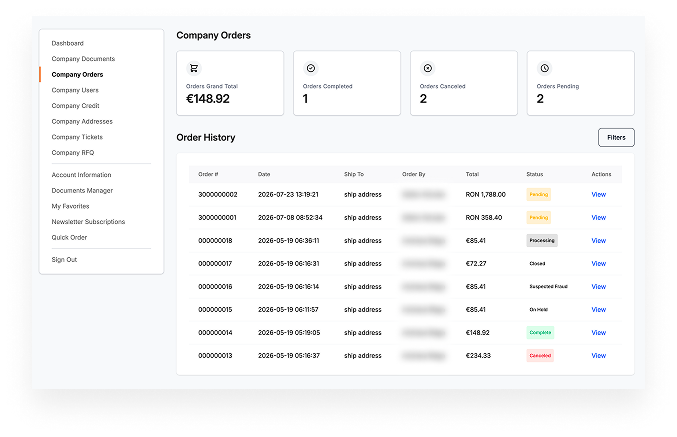
Complete Visibility Across Company Purchases
In a typical online store, users can only view the orders they have personally placed. In B2B environments, however, purchasing activities are often distributed across multiple employees, departments, and locations.
The Company Orders module provides a centralized view of all orders placed within a company account, giving authorized users full visibility into purchasing activity across the organization.
This helps businesses improve oversight, streamline procurement processes, and maintain a complete purchasing history in a single location.
Centralized Order Management
Instead of relying on individual employees to share order confirmations or provide updates, authorized users can access a consolidated list of company orders directly from their account dashboard.
Each order includes key information such as order number, date, status, value, and detailed order information, making it easy to track purchases and monitor order progress.
Key Benefits
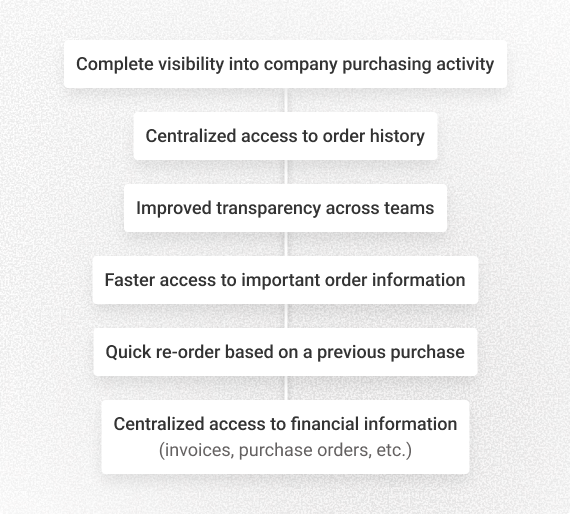
- Complete visibility into company purchasing activity
- Centralized access to order history
- Improved transparency across teams
- Faster access to important order information
- Quick re-order based on a previous purchase
- Centralized access to financial information (invoices, purchase orders, etc.)
Role-Based Order Visibility
Access to company orders is controlled through the platform's role and permission system.
Customer Organizations can decide which users are allowed to view company-wide orders, ensuring purchasing information remains available to the right people while supporting internal governance and security requirements.
Better Procurement Oversight
Managers, finance teams, and procurement departments often need visibility into purchasing activity across the business.
By providing a shared view of all company orders, the platform helps organizations monitor spending, track procurement activity, and access historical order information without relying on manual communication between employees.
Key Benefits
- Easier budget monitoring
- Improved purchasing control
- Faster access to historical orders
- Better support for auditing and reporting
Designed for B2B Collaboration
Company Orders works seamlessly with Company Accounts and role-based permissions, creating a collaborative purchasing environment where teams can access the information they need while maintaining appropriate access controls.
The result is a more efficient purchasing process and a better experience for both buyers and administrators.
Key Capabilities
- Shared order history across company accounts
- Detailed order information and status tracking
- Role-based visibility and permissions
- Centralized purchasing records
- Support for auditing and reporting
- Improved collaboration across teams
Multiple Product Lists
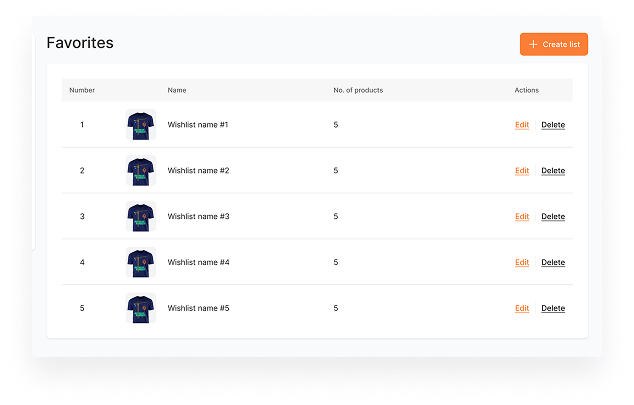
Organize, Share, and Reuse Product Selections
Business purchasing rarely happens in a single session. Teams research products, compare options, plan future purchases, and coordinate decisions across departments.
The Multiple Wishlists feature allows customers to create and manage multiple product lists within their account, making it easier to organize purchasing activities by project, department, location, budget, or business objective.
Unlike traditional e-commerce wishlists, these lists are designed to support real B2B buying processes and collaboration between colleagues.
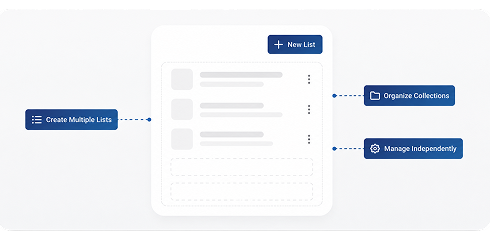
Create and Manage Unlimited Product Lists
Customers can create as many lists as needed and organize products into separate collections.
Whether they are preparing for a procurement cycle, planning a new project, or building a list of frequently ordered products, each product list can be named, managed, and updated independently.
Key Benefits
- Better product organization
- Structured purchasing workflows
- Easier planning and budgeting
- Faster access to saved products
Quickly Find the Right Products
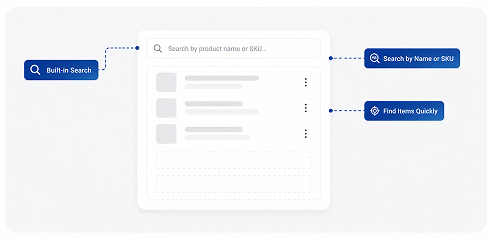
As product lists grow, finding a specific item becomes increasingly important.
Built-in search capabilities allow users to locate products within a list by product names or SKU references, helping them navigate large product selections quickly and efficiently.
Key Benefits
- Faster product discovery
- Easier navigation of large lists
- Improved user experience
- Reduced time spent searching
Share Lists Across Teams
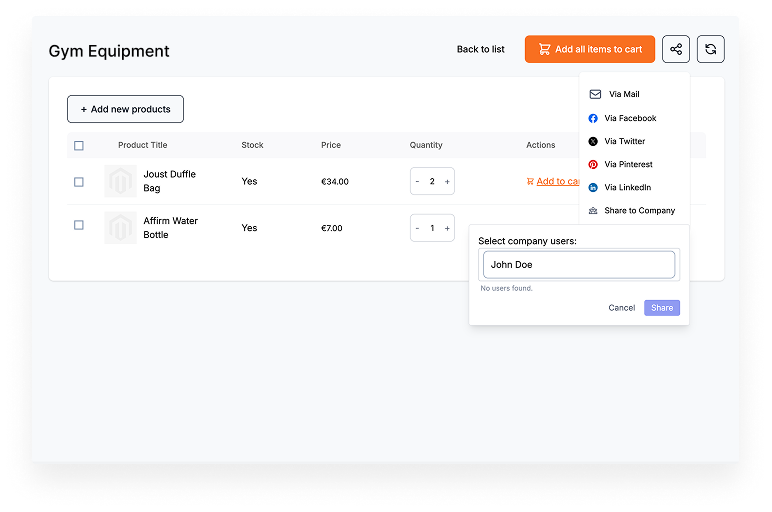
Product lists can be shared with colleagues within the same company account, making collaboration significantly easier.
Instead of exchanging spreadsheets, product links, or emails, users can share complete product selections with a few clicks. Recipients receive immediate access to the shared list and can continue working with the latest version.
This is particularly useful for procurement teams, department managers, and organizations where purchasing decisions involve multiple stakeholders.
Key Benefits
- Improved team collaboration
- Faster decision-making
- Elimination of manual product sharing
- Better alignment across departments
Build Reusable Purchasing Lists
Products added to the cart remain available in the wishlist, allowing customers to reuse their lists whenever they need to reorder.
This creates a convenient purchasing reference for frequently purchased products and recurring orders, reducing repetitive work and simplifying future procurement processes.
Built for Collaborative B2B Commerce
Multiple product lists integrate seamlessly with Company Accounts, enabling secure sharing and collaboration between users belonging to the same organization.
By combining product organization, team collaboration, and reusable purchasing lists, businesses can streamline procurement processes and provide a more efficient buying experience for their customers.
Key Benefits
- Create unlimited lists
- Organize products by project, department, or purpose
- Quick adding the entire list or selected items to cart
- Search products within lists by name or SKU
- Share lists with colleagues
- Receive notifications when lists are shared
- Reuse lists for recurring purchases
- Keep products in lists after adding them to the cart